Grand Ole Opry Show Length and What to Expect
A Grand Ole Opry show runs about two hours, including a 15-minute intermission. Learn what the live radio format feels like, how to plan transportation, what you can bring, and which accessibility arrangements require advance notice.
Choose the Nashville music experience that fits your night.
The Opry, Ryman, songwriter rooms and music-history stops all tell a different part of the city. Compare timing, seating, location and how much structure you want.
A Grand Ole Opry show runs around two hours and includes a 15-minute intermission. That makes the performance itself easy to fit into an evening, but your full outing will be longer once parking, walking to the venue, finding your seat, and leaving after the show are included. Confirm the start time on your specific event listing before arranging dinner or transportation.
- Allow approximately two hours for the show, including a 15-minute intermission.
- Expect a live radio broadcast featuring multiple artists rather than a conventional single-headliner concert.
- Check your event page because performers are announced and added over time.
- Plan parking, rideshare, or public transit before leaving for the Opry House.
- Review camera, food, stroller, and accessibility policies before packing your bag.
The format is part of the appeal. Instead of spending the entire evening with one artist, you hear a changing lineup within a live broadcast. The result feels closer to a polished country-music variety show, with each announced performer contributing to the same program.
Grand Ole Opry Admission with Post-Show Backstage Tour
GRAND OLE OPRY Experience the thrill of a live concert at Nashville’s premier country music stage, the world-renowned Grand Ole Opry. See new stars...

Grand Ole Opry House Guided Backstage Tour in Nashville
Go behind the curtain on a guided backstage tour of the Grand Ole Opry House, the concert hall that made Nashville t...

Taste of Nashville Food & Sightseeing Tour
On this fun and delicious tour, sample the best of Nashville's classic cuisine and visit some amazing places along t...
How long is a Grand Ole Opry show?
The official running time is around two hours, with a 15-minute intermission included in that window. You generally do not need to add the intermission on top of the two-hour estimate. Use two hours as the core commitment, then build a separate buffer around it for arrival and departure.
Your ticket's listed start time is the important anchor for the evening. Performance schedules can vary by date, so avoid building your plans around a start time remembered from another show. Check the selected event listing when booking and again while finalizing your Nashville itinerary.
| Part of the outing | Time to allow | Planning note |
|---|---|---|
| Arrival | Flexible buffer | Allow for your chosen transportation method, the walk to the building, and finding your seat. |
| Live show | Around two hours | The stated running time includes a 15-minute intermission. |
| Departure | Flexible buffer | Avoid scheduling a tight pickup or another timed activity immediately afterward. |
Why the complete outing takes longer than two hours
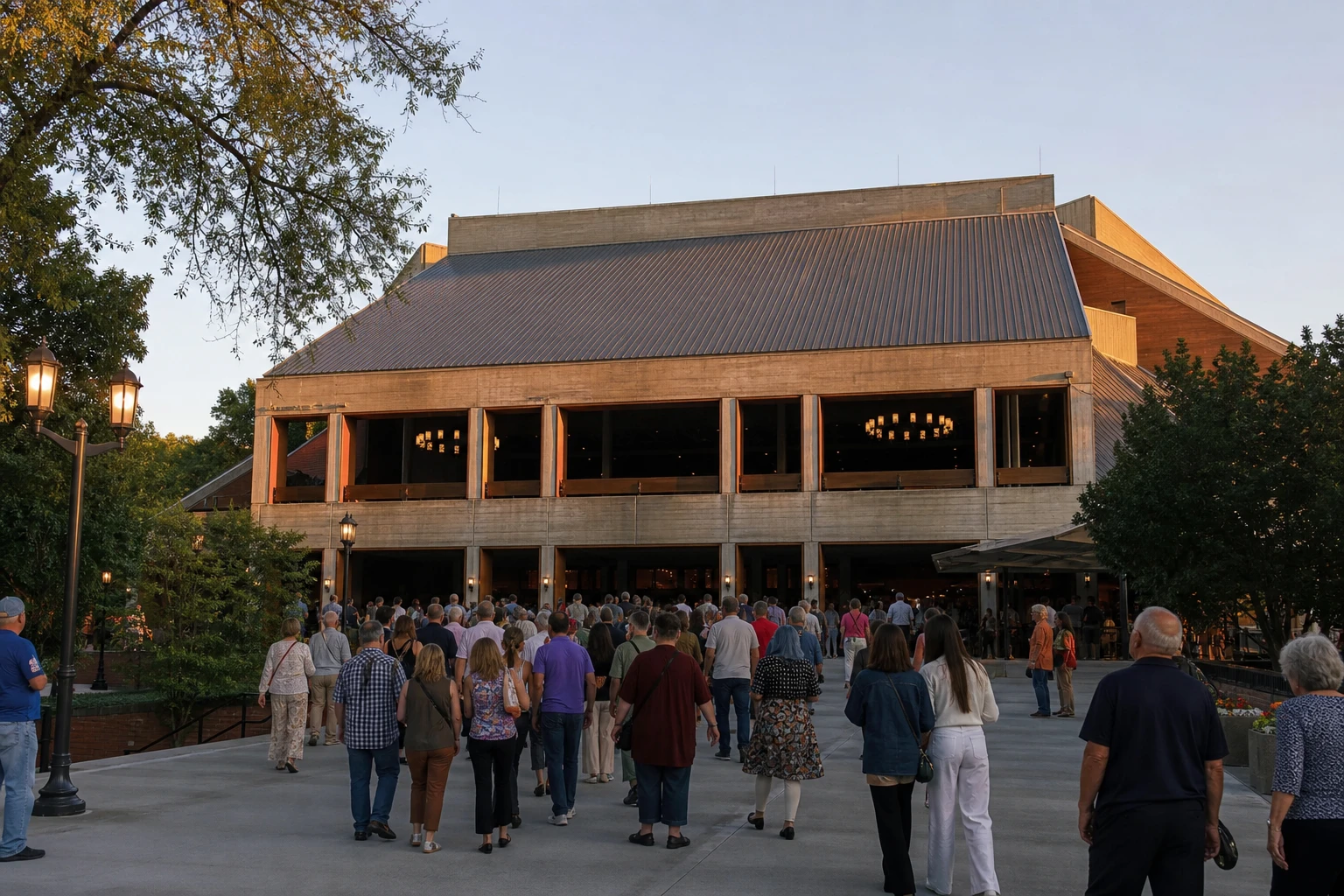
The two-hour figure covers the live show, not every minute of the visit. Drivers still need to park and walk to the Opry House, while rideshare passengers need time for drop-off and a pickup after the performance. Transit riders should also account for the current route schedule and walking details.
Places to stay for this itinerary
Pair the day-by-day plan with a hotel location that keeps the trip simple.
 Featured stay
Drury Plaza Hotel Nashville Downtown
- Free WiFi
- Non-smoking rooms
- Air conditioning
Central Location in Nashville Located in the heart of Nashville, Drury Plaza Hotel Nashville Downtown offers air-conditioned rooms with modern amenities and a range of facilities for a comfortable stay. Convenient Amenities Guests can enjoy a…
- Room, 2 Queen Beds, Hearing Accessible (Hearing…
- Breakfast Included
- Non-refundable rate
 Guest favorite
Cambria Hotel Nashville Downtown
- Free WiFi
- Non-smoking rooms
- Air conditioning
Central Location Located in the heart of Nashville, Cambria Hotel Nashville Downtown offers a convenient stay near popular attractions like Bridgestone Arena, Ryman Auditorium, and the Johnny Cash Museum. Modern Amenities Enjoy air-conditioned rooms, an outdoor…
- 2 Queen Beds, Nonsmoking
- Room Only
- Refundable until Nov 10
 Guest favorite
La Quinta Inn & Suites by Wyndham Nashville Downtown Stadium
- Free WiFi
- Non-smoking rooms
- Air conditioning
Central Location in Nashville Located in the heart of Nashville, La Quinta Inn & Suites by Wyndham Nashville Downtown Stadium provides a convenient base for exploring the city. Situated near top attractions like Nissan Stadium and…
- 2 Queen Bed Room
- Breakfast Included
- Non-refundable rate
A generous buffer is more useful than an exact arrival formula because transportation conditions and personal needs differ. Someone using reserved parking can plan differently from a visitor waiting for a bus or arranging accessible entry. Give the evening breathing room instead of placing a dinner reservation or another ticketed event immediately beside the show.
After the final portion of the broadcast, many audience members will be leaving at roughly the same time. A flexible pickup plan is less stressful than promising to be somewhere else minutes later. If you are traveling with children, a wheelchair user, or a larger group, add enough time to move at a comfortable pace.
What the live radio format feels like
The Grand Ole Opry is both a live radio show and a multi-artist country-music showcase. That distinction matters. You are not necessarily buying a standard concert built around one headliner and one long set. The evening is organized as a shared program featuring several announced performers.
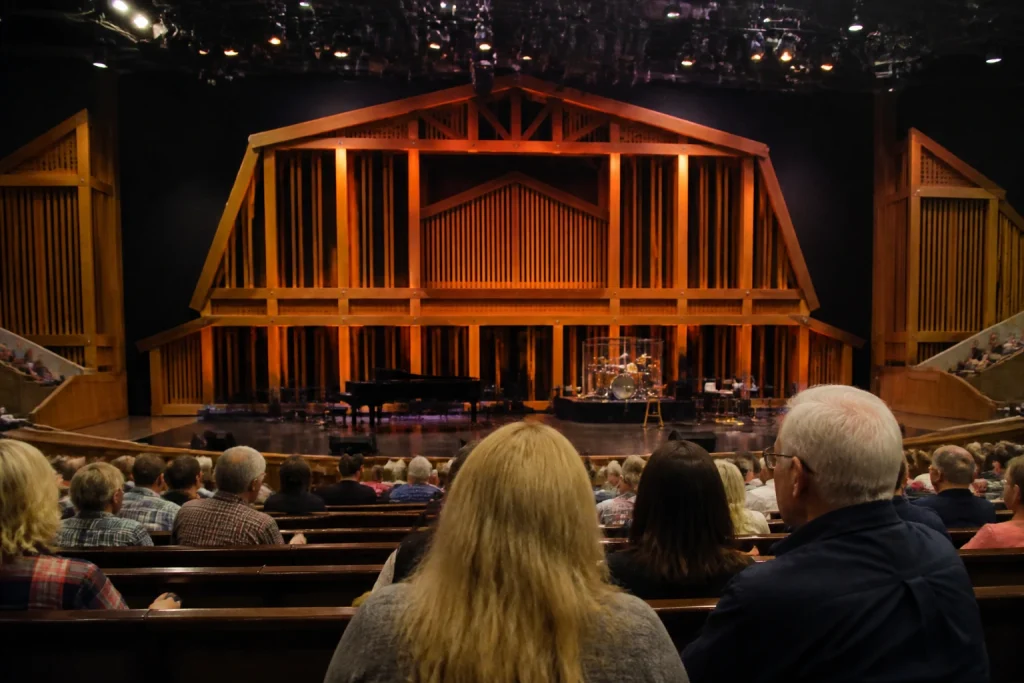
The rotating lineup gives the program variety. Voices, musical styles, and personalities can change as the broadcast moves forward. For travelers who enjoy discovering performers alongside familiar names, that structure is one of the experience's strongest qualities.
It also calls for different expectations. A favorite artist can be part of the show without being its sole focus. Book because the larger Opry format interests you, not because you expect every announced performer to deliver a full-length solo concert.
The intermission divides the approximately two-hour broadcast and gives the audience a short pause. Food and beverages are sold inside the venue, although the marketplace closes 30 minutes before the show ends. If you plan to buy something, do not leave that decision until the closing moments.
How to interpret the announced artist lineup
Artist lineups are updated on individual show pages as performers are announced. The names visible early in your planning process do not necessarily represent the final bill, so revisit the event page closer to your performance date.
Choose a date with performers you want to hear, but keep the multi-artist format in mind. The Opry experience belongs to the entire broadcast, and no single artist should be assumed to occupy most of the running time unless the selected event description explicitly says so.
This format works especially well for visitors who want a broad sample of country music in one evening. Travelers seeking a long set by one specific performer should compare the Opry format with a conventional tour concert before purchasing tickets.
What to expect from the seats and interior
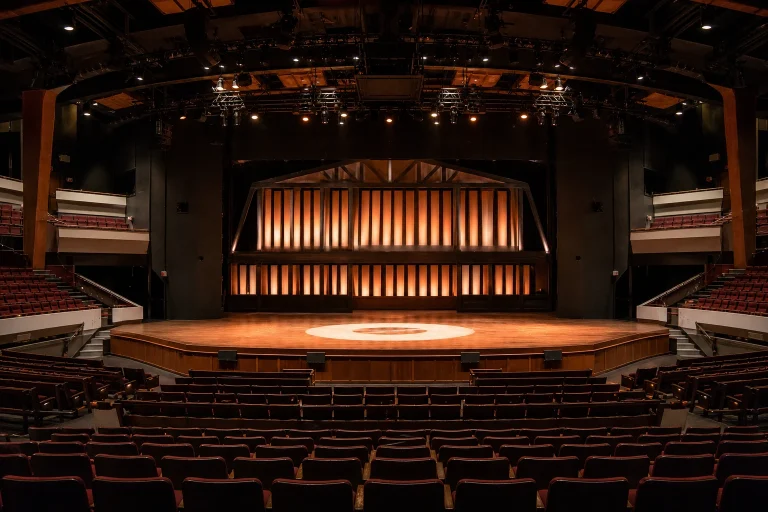
The Opry House uses cushioned, pew-style seating. Think of the arrangement as shared rows rather than separate theater chairs with individual armrests. That distinction can matter if you prefer a clearly divided seat or need extra personal space.
Check the seating selection carefully during the AXS purchase process, especially when anyone in your party needs an accessible location. Accessible seating is offered through that purchase flow and should be selected in advance rather than assumed to be available when you arrive.
Comfort also depends on what you carry. The building does not provide a coat or belongings check, so everything you bring must remain manageable during the performance. A light, compact approach is more practical than arriving with bulky outerwear or unnecessary gear.
Grand Ole Opry House Guided Backstage Tour in Nashville
Go behind the curtain on a guided backstage tour of the Grand Ole Opry House, the concert hall that made Nashville t...
Grand Ole Opry Admission with Post-Show Backstage Tour
GRAND OLE OPRY Experience the thrill of a live concert at Nashville’s premier country music stage, the world-renow...
Getting to the Grand Ole Opry House
The Grand Ole Opry House is located at 600 Opry Mills Drive in Nashville. Drivers can reserve Opry House parking in advance, which removes one decision from the evening. Check the parking option attached to your visit because a current universal parking rate should not be assumed.
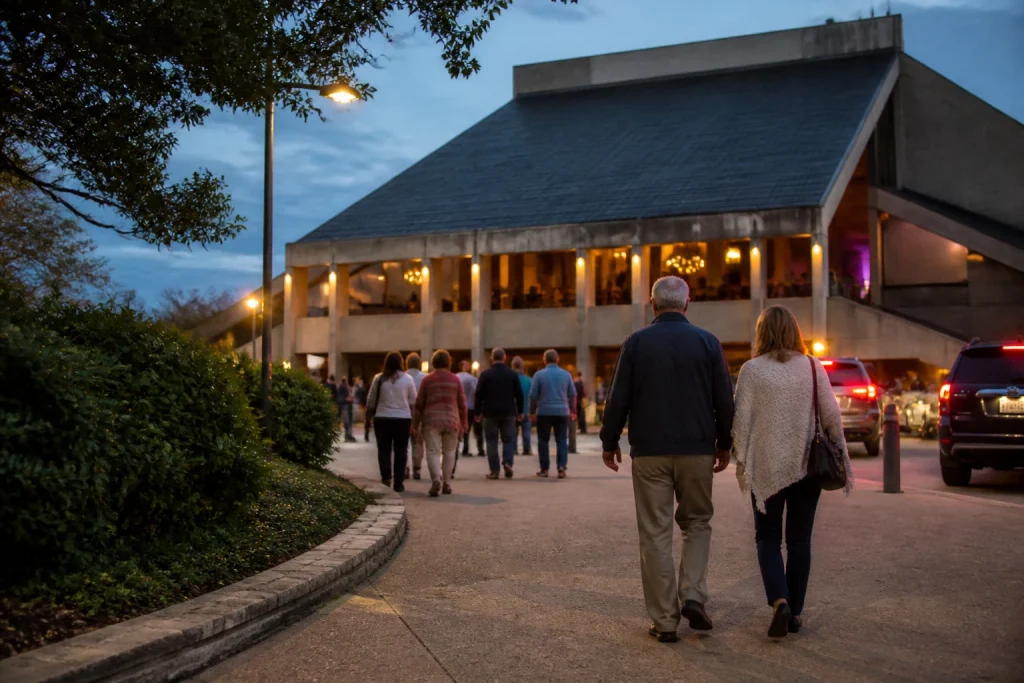
Rideshare is the lower-friction choice for many visitors who do not want to park. The Opry promotes Lyft as its official rideshare partner, though travelers can still compare their available transportation options. Plan the return trip before the show so you know how your group will reconnect after leaving the building.
Public transportation is possible, but it requires more schedule awareness. WeGo visitor information lists a local ride at $2 and an all-day pass at $4, while Route 34 serves Opry Mills. Confirm the current timetable, transfers, walking directions, and last useful return trip for your actual show date.
Our How to Get Around Nashville Without a Car guide can help you compare rideshare and public transportation within a larger trip. For an evening performance, prebooked parking or rideshare generally involves less planning than building the outing around bus frequency.
How to budget for the evening
There is no single ticket figure that works for every Opry show. Treat the selected event page as the source for the ticket cost on your date, then look at the complete evening rather than the seat alone.
- Show tickets for the selected date and seating area
- Parking or round-trip transportation
- Food and drinks purchased at the venue
- Optional merchandise
- Any meal or activity planned before the performance
Food, beverages, merchandise, parking, and rideshare are separate potential expenses. Decide which extras matter before arriving, especially if several people are attending. This simple budget prevents the ticket price from understating the full cost of the night.
If dinner is part of the plan, leave a comfortable gap before the listed show time. The Best Restaurants in Nashville guide can help narrow down a meal elsewhere in the city, but choose timing that does not turn dinner into a race to Opry Mills Drive.
What to bring and what to leave behind
Pack lightly. Outside food and drinks are prohibited, including outside water, and there is no check for coats or personal belongings. The easiest setup is a small collection of essentials that can stay with you throughout the performance.
- Bring the ticket or entry information required for your booking.
- Leave outside food and drinks, including water, behind.
- Do not bring video cameras, tripods, monopods, iPads, or audio-recording and streaming equipment.
- Check event-specific restrictions before bringing a personal still camera.
- Avoid bulky belongings because the venue has no coat or property check.
Personal still cameras may be permitted for Opry shows, but restrictions can differ by event. Video recording, audio recording, and streaming equipment are prohibited. Review the policy for your performance rather than assuming that permission for still photography covers every device or type of recording.
Smoking is not allowed anywhere in the facility. The live radio show also cannot page guests during a performance, so establish a meeting plan before taking your seats. Families and groups should make sure everyone knows where to reconnect if separated.
Still comparing Grand Ole Opry Show Length And Planning?
Ask for tour ideas, hotel suggestions, or a simple trip plan that combines both.
Trip Helper
Accessibility arrangements to make in advance
Accessible seating is available through the AXS ticket purchase flow. Select it while booking rather than waiting until the performance date. The Opry House also provides wheelchair lifts serving second-level seating, elevators with Braille signage, and accessible restrooms.
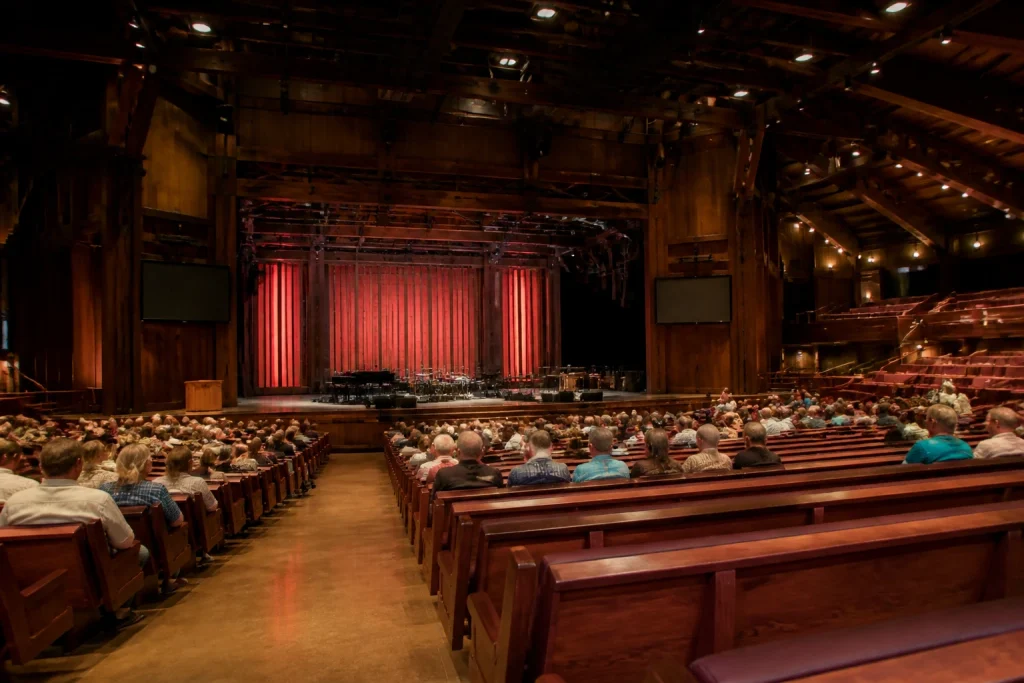
A limited number of wheelchairs can be borrowed on a first-come basis with photo identification. Because availability is not guaranteed, visitors who depend on a wheelchair should not build their plan around borrowing one at arrival.
FM assistive-listening devices are available, and service animals are allowed. The venue cannot accommodate Segway personal transportation devices. Review these details before choosing seats or deciding which mobility equipment to bring.
Guests who need a qualified interpreter should contact Opry customer service at least three weeks ahead. This is one arrangement where early planning is essential, particularly if the show is a fixed highlight of a short Nashville visit.
Planning an Opry visit with children or caregivers
Collapsible strollers are allowed, but they must be checked at the door and cannot remain in walkways. Keep the lack of a general belongings check in mind when deciding what else to bring for a child.
Changing facilities are available. However, the Opry House does not have a family or unisex restroom. That detail deserves advance attention for caregivers who provide opposite-gender restroom assistance or families accustomed to using a shared family restroom.
The Nashville Family Itinerary offers a broader framework for balancing music attractions with a child's usual meal and rest schedule. For the Opry itself, the two-hour running time and 15-minute intermission provide the clearest basis for deciding whether the evening suits your family.
When a daytime Opry tour makes more sense
A daytime Opry tour generally lasts 45 to 50 minutes, making it easier to fit into a crowded schedule. It is an alternative for travelers who cannot devote an evening to the approximately two-hour live show.
The tour and the show are different experiences. A daytime visit does not replace the live radio broadcast, its audience atmosphere, or its multi-artist performance format. Choose the tour for a shorter look at the Opry, and choose the show when hearing the broadcast is the main goal.
Travelers with only a narrow daytime opening may find the tour practical. Those interested in the Opry's defining performance format should protect the evening window and allow additional time around the stated two-hour running length.
Building the Opry into a Nashville itinerary
Treat the show as the anchor of the evening rather than one stop in a rapid sequence. A relaxed meal beforehand and an open schedule afterward work better than two tightly timed reservations. The exact amount of transportation time depends on where you are staying and how you travel.
The Country Music Hall of Fame Guide can help you plan a separate part of the trip around Nashville's country-music story. Keep that daytime sightseeing distinct from the Opry evening so you have time to return to your hotel, recharge, and travel to Opry Mills Drive without rushing.
Recheck three details before the day arrives: the event's listed start time, its developing artist lineup, and your transportation plan. Travelers using Route 34 should consult the current WeGo trip planner, while drivers should review advance parking and rideshare users should choose a post-show meeting strategy.
Also review accessibility requests and event-specific camera rules well ahead of the performance. Interpreter arrangements require three weeks' notice, while still-camera permission can depend on the event. Addressing those details early leaves the final day for enjoying Nashville rather than solving logistics.
Is the Grand Ole Opry show right for your trip?
The show suits travelers who want a structured evening of country music with several artists and the added character of a live radio broadcast. Its approximately two-hour running time is substantial enough to feel like a complete event without occupying the entire day.
The main limitation is also central to the format: an announced favorite is part of a shared program, not necessarily the night's sole focus. Visitors who want one long headlining set should consider that difference carefully. Those who enjoy variety are likely to find the rotating lineup more appealing.
Start with the event page for your date, review the latest lineup, and plan for two hours inside plus a comfortable transportation buffer. With those basics settled, the evening becomes straightforward: arrive without a rush, settle into the pew-style seating, and enjoy the live broadcast as a complete show.
Frequently asked questions
How long does a Grand Ole Opry show last?
A Grand Ole Opry show lasts around two hours, including a 15-minute intermission. Add separate time for parking or rideshare, walking to the building, finding your seat, and leaving afterward.
Is the Grand Ole Opry a single-headliner concert?
No, the Opry is a live radio broadcast and multi-artist country-music showcase. An announced performer is part of the larger program and should not automatically be expected to give a full-length headlining set.
Does the two-hour Opry show length include intermission?
Yes, the approximately two-hour running time includes a 15-minute intermission. You generally do not need to add another 15 minutes to the stated estimate.
When should I arrive at the Grand Ole Opry House?
Arrive with enough time for your transportation method, the walk into the venue, and finding your seat. Check the selected event listing for its start time because a single arrival requirement should not be assumed for every performance.
Can I bring water into the Grand Ole Opry House?
No, outside food and beverages are prohibited, including outside water. Food and drinks are sold inside the venue.
Can I take photos during a Grand Ole Opry show?
Personal still cameras may be permitted for Opry performances, subject to event-specific restrictions. Video cameras, tripods, monopods, iPads, and audio-recording or streaming equipment are prohibited.
Is accessible seating available at the Opry House?
Yes, accessible seating is available through the AXS purchase flow and should be selected in advance. The venue also provides wheelchair lifts, elevators with Braille signage, accessible restrooms, and FM assistive-listening devices.
How far ahead should I request an interpreter?
Contact Opry customer service at least three weeks ahead if you need a qualified interpreter. Make this arrangement before finalizing a time-sensitive visit.
Can I take public transportation to the Grand Ole Opry?
Yes, WeGo Route 34 serves Opry Mills. Check the current timetable, transfers, walking directions, and return options for your performance date before relying on the bus for an evening show.
How long is a daytime Grand Ole Opry tour?
A daytime Opry tour generally lasts 45 to 50 minutes. It is a different experience from attending the approximately two-hour live radio show.
Grand Ole Opry Admission with Post-Show Backstage Tour
GRAND OLE OPRY Experience the thrill of a live concert at Nashville’s premier country music stage, the world-renowned Grand Ole Opry. See new stars...
Grand Ole Opry House Guided Backstage Tour in Nashville
Go behind the curtain on a guided backstage tour of the Grand Ole Opry House, the concert hall that made Nashville t...